
"A household based in North London seeks an extraordinary and skilled tutor to support their most junior child on his early path to growing into an English gentleman."
When reading this listing, you might naturally overlook the term "first-steps" as just a turn of phrase.
But, it may be the most important element of this unique employment listing, as it seeks to find a tutor for a one-year-old.
Numerous of submissions have since been submitted since the anonymous family posted their search for the highly paid tutor, who needs to be "a uniquely qualified person".
During the past few weeks, the advert has received attention in the media, with numerous wondering why?
Forward-Thinking Method
The CEO, chief executive of Tutors International, which is assisting the family in their quest, said that in spite of initial skepticism, he considered the concept "forward-looking", and "progressive".
When he spoke with the family, he mentioned they understood the unconventional character of their requirement, and how early in age their son is.
Nevertheless, they stated that they "didn't want to wait any longer" to get a tutor, as they had waited until their older child was five, and by that point "cultural conditioning had already set in".
But what did the family mean by "cultural leaning"?
It's "all-encompassing", Adam answered. "The way you eat, the way you speak".
He said the older sibling had adopted "extremely delicate, unspoken signals" from the family, and had taken on their cultural ways. The family informed him they wished to avoid the same situation to repeat itself with their infant.
The plan: To bring in a UK tutor, who should speak with standard English accent, to shape the baby right from the beginning.
Natural Absorption
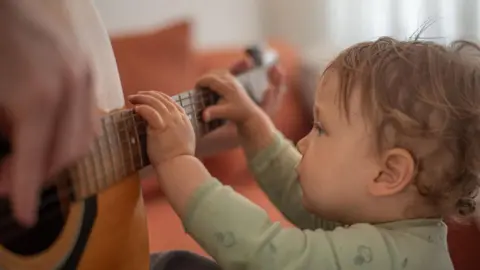
"Much of the education at the start here is rather acquired indirectly," said Adam.
It's through this osmosis that the family are aiming the child will pick up the British traits they want to cultivate.
He noted the tutor must be someone who went to "prestigious academies – similar types of schools as the family hope to send their son to".
"The tutor must be the appropriate candidate, they'll be doing things they don't even know they're doing, just naturally," he said.
Cost Not Relevant
The family explained to him the chosen tutor should ideally also have knowledge of or interest in horse riding, winter sports, the arts and music so as to influence the child in a diverse set of passions.
More than that though, he stated the family desired the tutor to enrol the child on a variety of lessons so the child would be "horseback riding and starting an musical instrument by the time they are approximately three years old".
In the family's view, assisting their son develop into a "UK sophisticate" will bring about success and provide access.
"For all the advantages and disadvantages of that, because it's undoubtedly a status symbol," he adds.
However, despite all this guidance in "Britishness", might the child absorb what is termed cultural bias from the international family he is raised by anyway?
"Certainly", replied Adam. "The parents understand this might not succeed, but they've merely embraced the perspective of, 'let's give it a go and we should start as early as we can', because the cost of it is irrelevant," he stated.
Overly Optimistic
A number of in the private teaching field who share these doubts.
Peter Cui, head and founder of a tutoring service, who provides private tutors, stated that "the journey of embracing two identities, or in fact, becoming oneself, is something that must be grown into, not engineered."
He wrote that he had emigrated from China to the Britain at the period of 7 years old, and had been educated experiencing and practicing dual heritages. He continued to be educated at Cambridge University.
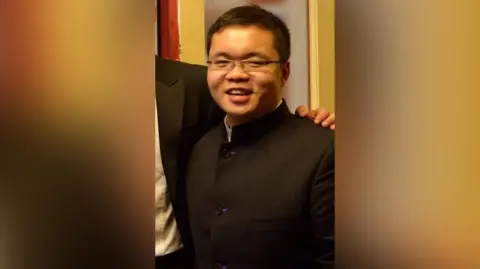
"The concept that one individual can act as a representation of English culture, someone who can somehow transfer the characteristics of a English gentleman upon a one-year-old child, appears naive and unrealistic," he wrote.
"In my experience, engaging a quintessentially English tutor from early childhood will not instantly achieve the goal they desire.
"I wasn't provided with such a tutor, and nevertheless I have been fortunate enough to enjoy several of the situations they aspire for their son."
He added: "The reality is, cultural identity should not be forced from the outside; it must be chosen, and it must be internally driven."
Acquiring Englishness
Certainly, Britishness is something the expert thinks can be educated – and sold.
"I believe the reality that the world views us in this light is something that we should be cherishing|valuing|appreciating


